
A sundial is a quiet subject until the light turns. At golden hour, the low sun stretches the gnomon’s shadow across the dial face, warms the stone or metal, and gives the sky enough colour to make the scene feel like more than a record shot. The challenge is control: a bright sky, a dark shadow and a dial face full of fine lines can overwhelm the camera if you let them.
Golden hour is forgiving. You do not need exotic gear. You need to arrive early, understand how the shadow falls and make a few deliberate choices about exposure and composition. These steps will help you bring home a photograph where the shadow reads clearly and the sunset does the rest.
Why Golden Hour Flatters a Sundial
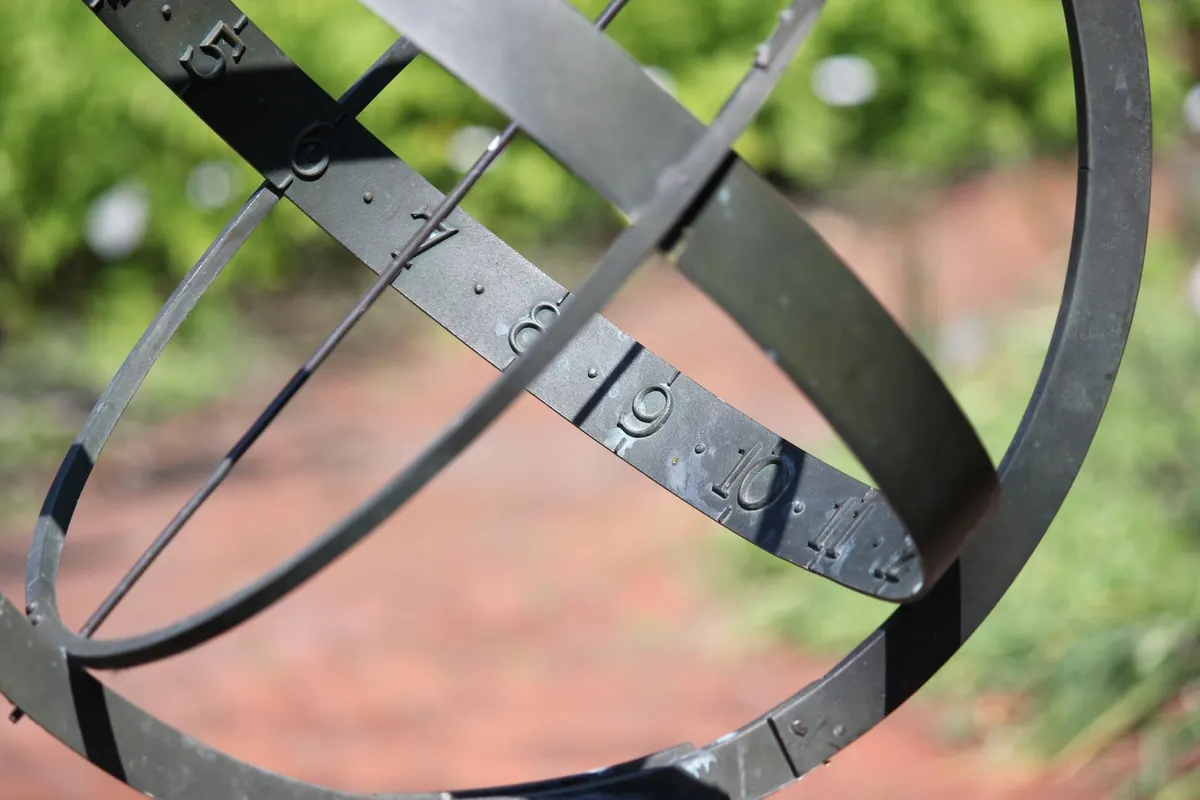
Golden hour light is low, warm and directional. That direction matters. A sundial is read by the edge of a shadow, so side light is your friend. When the sun is high, the shadow is short and the dial face can look flat. When the sun drops, the shadow lengthens, the numerals gain texture and the gnomon—the raised piece that casts the shadow—separates from the background.
The sky also does more work. A warm gradient behind the dial gives you separation without needing a busy background. If the dial stands in a garden or on a wall, the low light can pick out leaves, brickwork or stone grain while the sky shifts from gold to peach to blue. You are photographing two things at once: an instrument and the atmosphere around it.
Scout and Plan Before the Light Changes
Golden hour is short. Treat the first visit as a scouting trip, even if you carry a camera. Walk around the dial and note where the sun will be. A sun-position app or the compass on your phone can help, but your eyes will tell you most of what you need: which side of the dial is lit, where the long shadows fall and whether a tree, wall or building will block the light before sunset.
Read the dial first
Find the gnomon, the style and the hour lines. Check whether the dial face is flat, tilted or vertical. A horizontal dial in an open garden behaves differently from a vertical dial on a wall. You want the shadow to land on the face, not slide off the edge. If the sun is already very low, the shadow may be too long; arrive earlier and watch how it moves.
Choose a clean background
Look behind the dial from several angles. A dark hedge can swallow a dark shadow; a bright wall can make the shadow stand out. A plain sky is clean but can feel empty, so consider a sliver of roof, a branch or a distant horizon for context. Keep the background simple enough that the dial and shadow stay dominant.
The Timing Window
Plan to be in position at least 45 minutes before sunset. That gives you time to set up, check focus and watch the light change. The best moment is often not the last minute before sunset. As the sun approaches the horizon, contrast climbs, shadows become very long and the sky may be brighter than the dial. Sometimes the twenty or thirty minutes before that—when the light is still golden but manageable—give you the cleanest shadow detail.
Watch the edge of the shadow, not just the dial. The sharpest, most readable shadow often appears when the sun is low but not yet touching the horizon. If you want a warm sky and a clearly visible dial face, you may need to shoot slightly earlier and let the sky go a little paler. If you want drama, wait for the richer colour and accept a darker dial or a silhouette.
The shadow is the subject as much as the dial. Photograph the relationship between the two, and the picture will have a reason to exist.
Composition: Gnomon, Shadow, Sky
Start with a clear view of the dial face. Then decide how much sky to include. A tight frame on the gnomon and shadow can be powerful, especially when the shadow points toward a corner of the frame. A wider view shows the dial in its setting and gives the sunset context. Both work; the mistake is to split the difference and include too much empty foreground.
- Use the shadow as a leading line. Place the tip of the shadow near a third of the frame or let it run toward a numeral. The eye will follow it back to the gnomon.
- Shoot from the side. A three-quarter angle shows the raised gnomon and the shadow at the same time. Straight-on views can flatten the dial.
- Keep the horizon level. A tilted horizon is distracting in a scene built on geometry. Use the camera’s level or check the grid.
- Leave breathing room. If the shadow points left, give it space to travel. Do not crop it at the edge unless you want deliberate tension.
If you include the sun, be careful. A direct sunburst can wash out the dial face and create flare across the shadow. Try a frame where the sun is just outside the edge, or let the gnomon block it. A silhouette can be beautiful, but it is a different photograph: the dial becomes a shape, not a readable instrument.
Exposure and Colour
Golden hour is a high-contrast scene. The sky may be several stops brighter than the shaded side of the dial. Shoot raw if you can, and expose for the highlights. Check the histogram: you want the brightest part of the sky to stay short of clipping, while the shadow retains enough detail to recover later. If the dial face goes too dark, bracket a few frames and blend them, but keep the blend natural. Halos around the gnomon look worse than a little shadow noise.
Start with a low ISO and an aperture around f/8 for depth of field. Use a tripod if the light is fading or if you want a slow shutter for a calmer sky. A polarising filter can deepen a blue sky and control reflections on a metal dial, but use it sparingly—it can also cool the warm light and flatten the shadow. A lens hood helps keep stray sun out of the glass.
White balance and warmth
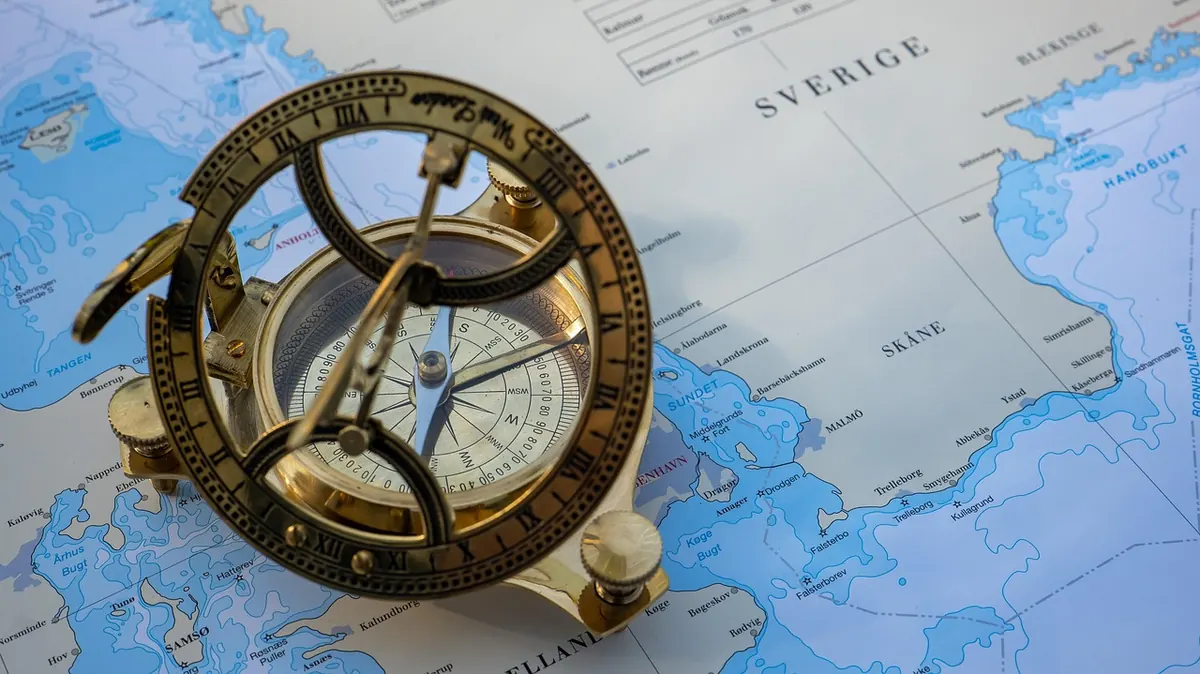
Do not fight the warmth. Daylight white balance is a sensible starting point; it preserves the golden feel without making the stone look orange. If you shoot raw, you can fine-tune later. Avoid the temptation to cool the image too much in editing. The sky should still feel like sunset, and the dial should still look like stone, brass or painted metal rather than a colour cast.
Focus, Tripod and Small Details
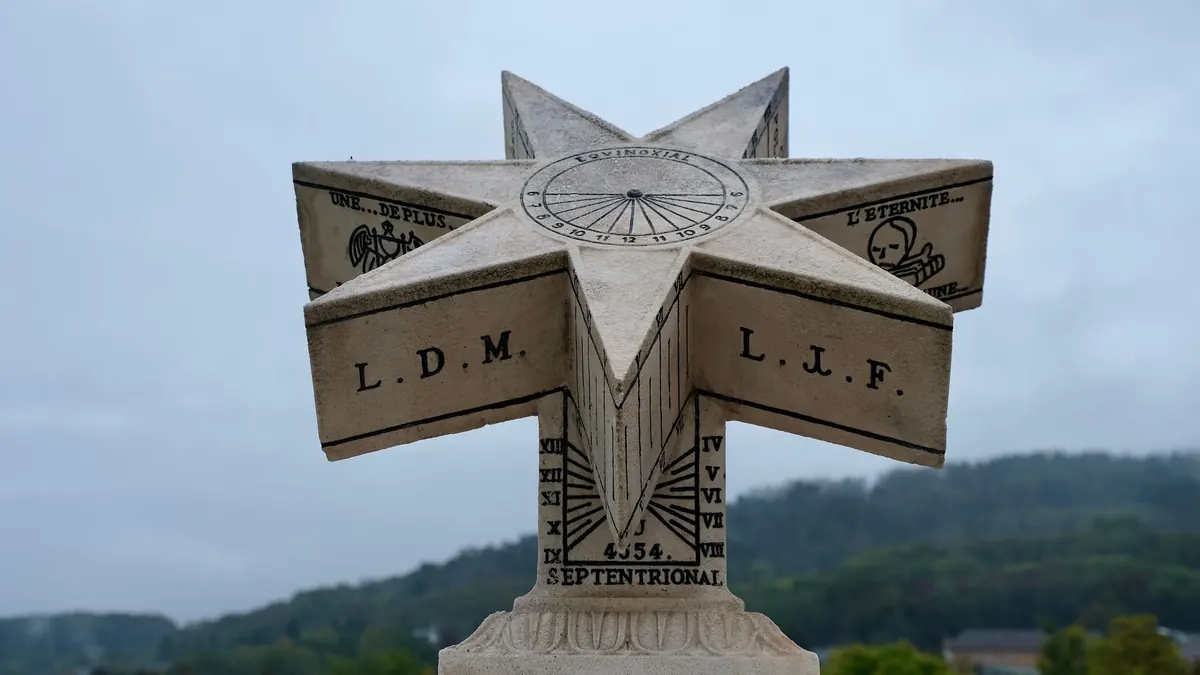
Focus on the gnomon’s edge or the nearest numerals, then check at magnification. Fine hour lines and Roman numerals are easy to miss on a small screen. Use live view and zoom in if your camera allows it. A tripod lets you use a small aperture and a low ISO without worrying about shake; turn off image stabilisation when the camera is locked down.
Clean the dial face if it is dusty, but do not scrub old patina. A soft brush or cloth is enough. Watch for distractions: a leaf across a numeral, a cable, a bright reflection, a stray person in the background. Golden hour light is forgiving, but it also highlights clutter. Move your feet before you move the dial.
A Simple Field Routine
When the light starts to turn, keep the process simple. A repeatable routine leaves room for looking.
- Arrive 45 minutes early and walk the scene without the camera.
- Set up where the shadow lands on the dial face and the background stays clean.
- Choose your frame: tight on the shadow or wide with the sky.
- Set ISO low, aperture around f/8, and expose for the sky highlights.
- Focus on the gnomon edge, then reframe carefully.
- Shoot a few brackets and wait for the light to shift.
- Review the histogram, not just the screen, before the colour fades.
Golden hour rewards patience more than gear. The dial will not move, but the shadow will. Stay a little longer than you think you need to, take one frame that is clean and one that is atmospheric, and resist the urge to overprocess the result. A clear shadow against a warm sky is enough.
Photo: orko46 / Pixabay